
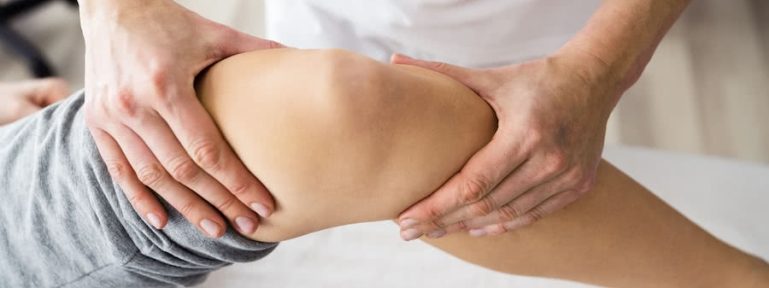
Fluid on the knee is a pain. Not just in the literal sense, of causing pain, but the issues it creates with joint stiffness. Having fluid on the knee or swelling means there is a pressure exerted against the joint, and with limited space in your knee, the excess fluid creates a hydrostatic pressure that reduces the ability to bend and straighten your knee. For others, having fluid on the knee just looks bad. People generally don’t like asymmetry, and when the weather gets warm, people often don’t like the visual appearance of excess fluid or swelling. So what should you do, or will fluid on the knee go away by itself?
Does the fluid really go away?
It’s quite obvious when you have a swollen knee joint. It will look puffy and patients often describe the knee as “double the size” or “ballooned out”. Does the fluid really go away? Like I say in previous articles… it depends.
In some cases, swollen knees simply settle down and reduce in size on their own. Often using rest, ice, compression and elevation (known as the acronym, RICE) can help. Now we often have more advanced acronyms like RICER, POLICE, and PEACE & LOVE. But if we just focus on RICE, this can help reduce inflammation and swelling.
However, sometimes, the swelling just does not budge.
Why Does the Swelling Not Go Away?
Sometimes knee swelling becomes chronic. This is common in the body, where inflammation stays chronic, and can happen in many joints, most commonly in the back where persistent inflammation causes months of discomfort and pain.
Sometimes there are benign reasons for the knee swelling to stay where it is. However, there are many times where knee swelling does not reduce and these are listed below:
Injury and Trauma
Trauma to the knee is often not good. This is usually a high-impact sports-injury, and typically causes structural damage. Injuries such as fractures, ligament tears, and meniscus tears can cause bleeding, leading to fluid on the knee. Another cause is blunt trauma, and I’ve had several patients see me following a motorbike accident where they have hit the knee hard. Trauma to the knee can cause bleeding within the joint and inflammation. These injuries often require prompt medical attention to prevent further complications and manage the fluid buildup effectively.
Infections
Infections are really bad, and fortunately quite rare. Conditions such as septic arthritis can lead to significant swelling and fluid accumulation. Bacterial infections can cause the body to produce excess fluid in an attempt to fight off the infection. Symptoms of an infected knee joint include severe pain, fever, and redness, and require urgent medical treatment to prevent the spread of the infection and protect the joint. This can happen post-surgery, or in patients with low immune health. If you have these symptoms, go to A&E.
Osteoarthritis and Rheumatoid Arthritis
Arthritis is another common cause of fluid on the knee. Both osteoarthritis and rheumatoid arthritis can lead to chronic inflammation of the knee joint, resulting in the buildup of fluid. This fluid accumulation can cause pain, stiffness, and swelling, making it difficult to perform daily activities. Managing arthritis often involves therapy, as well as activity medication and in many cases, medication.
Bursitis
Pressure injuries such as bursitis can also cause the bursa to swell, and fluid to accumulate in the knee. Repetitive motions or excessive strain on the knee joint can lead to inflammation and the production of excess synovial fluid. Athletes and individuals with physically demanding jobs are often susceptible. The most common bursitis is pre-patellar bursitis, or house-maid’s knee, due to repeated compression through the knee cap (patella). I’ve seen this several times, and it’s a fascinating accumulation of fluid right on top of the patella.
Other Medical Conditions
Other medical conditions, such as gout and pseudogout, can lead to knee effusion. These conditions involve the buildup of crystals and uric acid in the joint, causing acute inflammation and fluid accumulation. Gout is incredibly painful, and is often related to lifestyle factors (especially poor diet, alcohol, obesity, and kidney failure).
Factors Influencing Recovery
Severity of the Underlying Cause
The severity of the underlying cause plays a significant role in determining whether fluid on the knee will go away. Minor injuries and mild inflammation often resolve with appropriate treatment and rest, while severe injuries or chronic conditions may require more intensive intervention and longer recovery times.
Timeliness of Treatment
Timely treatment is crucial for effective recovery. Addressing the cause of knee effusion promptly can reduce the risk of complications. Delayed treatment may lead to prolonged symptoms and potentially permanent damage to the knee joint. Seek advice from your doctor, physiotherapist, or osteopath.
Compliance with Treatment Plan
Compliance with the prescribed treatment plan is essential for successful recovery. This includes following recommendations for rest, physiotherapy, medications, and any other interventions. Adherence to the treatment plan can significantly improve outcomes and reduce the duration of symptoms.
Overall Health and Fitness
A person’s overall health and fitness level can also impact recovery. Individuals in good health with strong immune systems and healthy lifestyles are likely to recover more quickly and effectively from knee effusion. Maintaining a healthy weight and staying active can support joint health and aid in recovery.
Prognosis and Recovery Time
Expected Duration of Symptoms
It’s usually longer than you imagine. My experience is that most people think that the swelling will settle in a few days, but it can take months and sometimes never does reduce.
The duration of symptoms associated with fluid on the knee can vary widely depending on a number of factors. For example, if you keep hammering the knee with running despite having some swelling, you’ll clearly create a bigger issue.
Mild cases resulting from minor injuries or overuse may resolve within a few days to weeks with proper rest and treatment. More severe cases, such as those involving significant trauma or chronic conditions like osteoarthritis, may take several weeks to months to improve, and in some cases, they won’t fully settle.
Factors Affecting Prognosis
Several factors can affect the prognosis for knee effusion, including the individual’s age, overall health, and the presence of any underlying medical conditions. Young people tend to respond best, and those in good health tend to recover more quickly, while older adults or those with chronic illnesses may experience longer recovery times. However, this is not always the case. I’ve seen plenty of people with chronic knee swelling in their 20s and 30s, despite being in good health. It really does vary, but a good underlying health usually helps.
Extended Outlook
The extended outlook for knee effusion depends largely on the underlying cause and how well it is managed. Degenerative meniscus tears and osteoarthritis are often problematic over the long-term. However, bursitis often tends to settle down in many cases. I often find that aspiration (removing the fluid) helps significantly, and patients get an immediate sense of relief when the fluid is out.
Long-term Management
Get a Check-up
Regular check-ups with a healthcare provider can help ensure that any underlying conditions are well-managed and that any new symptoms are addressed promptly. These check-ups provide an opportunity to evaluate the effectiveness of current treatments and make any necessary adjustments to the care plan. Speak to your musculoskeletal specialist, physio, osteopath or doctor on how best to manage the fluid accumulation.
Lifestyle Adjustments
Making lifestyle adjustments can significantly impact the management of knee effusion. Maintaining a healthy weight, staying active with low-impact exercises, and avoiding activities that put excessive strain on the knee can help reduce the risk of fluid buildup. Incorporating joint-friendly practices into daily routines can support long-term knee health.
Support and Resources
Hopefully this website will be the main resource you need to make a decision on the best treatment option for your swollen knee.
Preventing Fluid on the Knee
Avoiding Overuse and Injury
Preventing overuse and injury is key to avoiding fluid accumulation in the knee. This involves using proper techniques during physical activities, avoiding repetitive motions that strain the knee, and taking breaks to rest and recover.
Proper Warm-Up and Cool-Down Exercises
Incorporating proper warm-up and cool-down exercises into workout routines can help prevent knee injuries. These exercises prepare the muscles and joints for activity and reduce the risk of strain and overuse injuries.
Using Supportive Gear
Using supportive gear, such as knee braces or appropriate footwear, can provide additional stability and protection for the knee joint, especially in sports where high-impact trauma is possible.
Final Thoughts on will Fluid on the Knee go away
Will fluid on the knee go away? The answer is rarely simple… sometimes yes, sometimes no. You should follow a treatment plan by your therapist. However, if swelling does not disappear, you may need to seek further investigation such as an MRI scan, or opt for draining the fluid via an aspiration.