
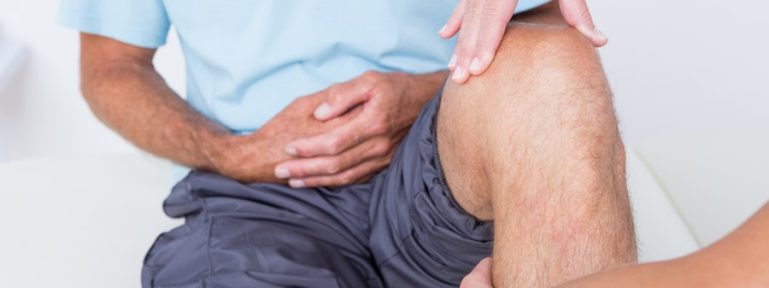
This may sound like an obvious question, but you’d be surprised how many people get it wrong. People sometimes come to see us for knee aspiration but they don’t have any swelling. We’ll check it with an ultrasound scan, and no swelling. But that’s ok, because we’re experts in knee swelling, and we’ll tell you if we can get the fluid out or not. So how do you know if you have fluid on the knee? Read on…
Symptoms of Fluid on the Knee to Look Out For
Visible Swelling
Of course, one of the most noticeable symptoms of fluid buildup in that the affected knee is visibly swollen, and often the affected side is going to look bigger when compared to the non-affected side.
Pain and Discomfort
Pain and discomfort are common symptoms of knee effusion. The severity and type of pain can vary, ranging from a dull ache to sharp, intense pain. Pain might be felt deep within the knee joint or around the surrounding areas, particularly if the swelling is causing increased pressure and inflammation. This discomfort can often be exacerbated by movement or weight-bearing activities, but also from keeping your knee still for too long.
Stiffness and Reduced Mobility
Fluid in the knee can lead to stiffness and a noticeable reduction in mobility around the knee joints. Patients often report difficulty in bending or straightening the knee fully, which can significantly impact daily activities. Stiffness is usually worse in the morning or after periods of inactivity and may improve slightly with movement as the day progresses.
Warmth and Redness
A red and warm knee is another possible sign of fluid accumulation. The affected swollen knee may feel noticeably warmer to the touch compared to the other knee, and the skin over and around the joint might appear red. This warmth and redness indicate inflammation, which is the body’s response to injury or infection.
Other Common Indicators of Knee Effusion
Difficulty Bearing Weight
People with fluid in the knee often experience difficulty bearing weight on the affected leg. This can make walking, standing, and other weight-bearing activities challenging. The discomfort and instability may lead to a limp or other compensatory movements to avoid putting pressure on the knee.
Popping or Clicking Sensation
A popping or clicking sensation within the knee joint can be another common indicator of knee effusion. This sensation can occur when there is excess fluid causing friction between the bones and other structures within the knee. It might be accompanied by a feeling of catching or locking, particularly during movement.
Self-Examination Tips
Checking for Swelling
Regularly checking the swelling can help you monitor changes in your knee's condition. Compare the size and shape of your affected knee with the other knee, for signs of fluid buildup.
Assessing Pain Levels
Pay attention to the intensity and location of your pain. Keep track of activities that exacerbate or alleviate the pain and note any patterns or changes over time. This information can be valuable for your doctor during a medical evaluation.
Observing Changes in Knee Appearance
Look for visible changes in your knee's appearance, such as redness, warmth, or a bulge behind the knee. These visual cues can provide important insights into the underlying cause of your symptoms.